Led the product design team responsible for Rider Fundamentals—the core operational engine powering deliveries across global markets. Beyond overseeing product execution, my focus centered on elevating team talent, streamlining global design operations, bridging cross-functional strategy with Product and Engineering, and deepening domain empathy through hands-on field research.
role
Manager, Product Design
timeline
18 Months
scope
Rider Experience & Core Logistics Domain
team
6 Product Designers (IC1–IC4), 1 Senior UX Researcher, 1 Design System
team leadership, mentorship & growth
Managing a multidisciplinary team ranging from associate level (IC1) to staff level (IC4), alongside a Senior UX Researcher, required tailored management strategies to foster individual career progression while aligning with broader business goals.
- Built structured individual development plans (IDPs) that mapped daily execution to competency frameworks for clear evaluation metrics.
- Successfully built business cases and advocated for 4 team promotions across ~18 months, guiding team members through peer reviews, impact documentation, and leadership alignment.
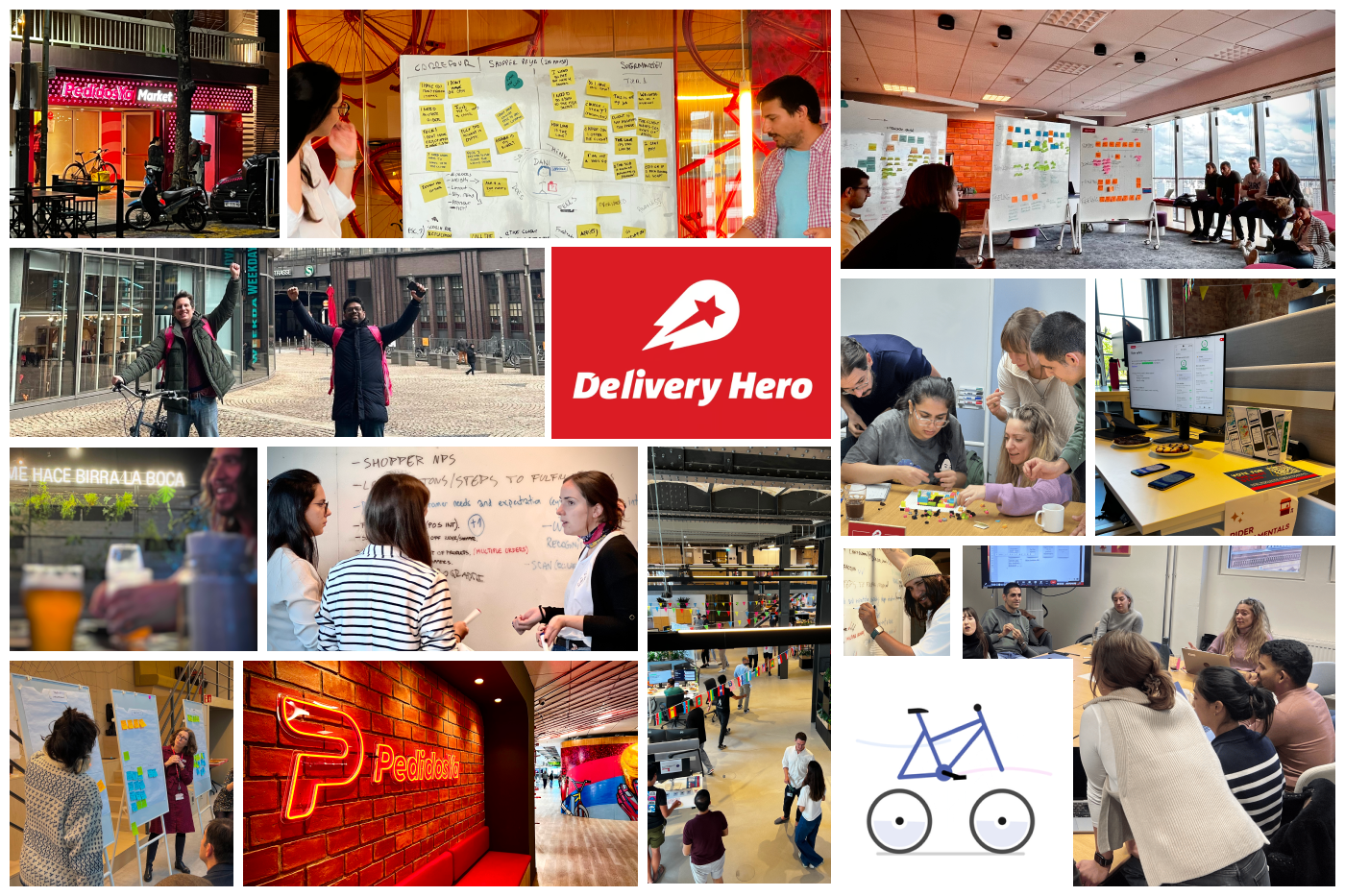
- Facilitated recurring design workshops and collaborative sessions across the Rider product line to build domain cohesion, share best practices, and break down silos across distributed pods.
design systems & operational efficiency
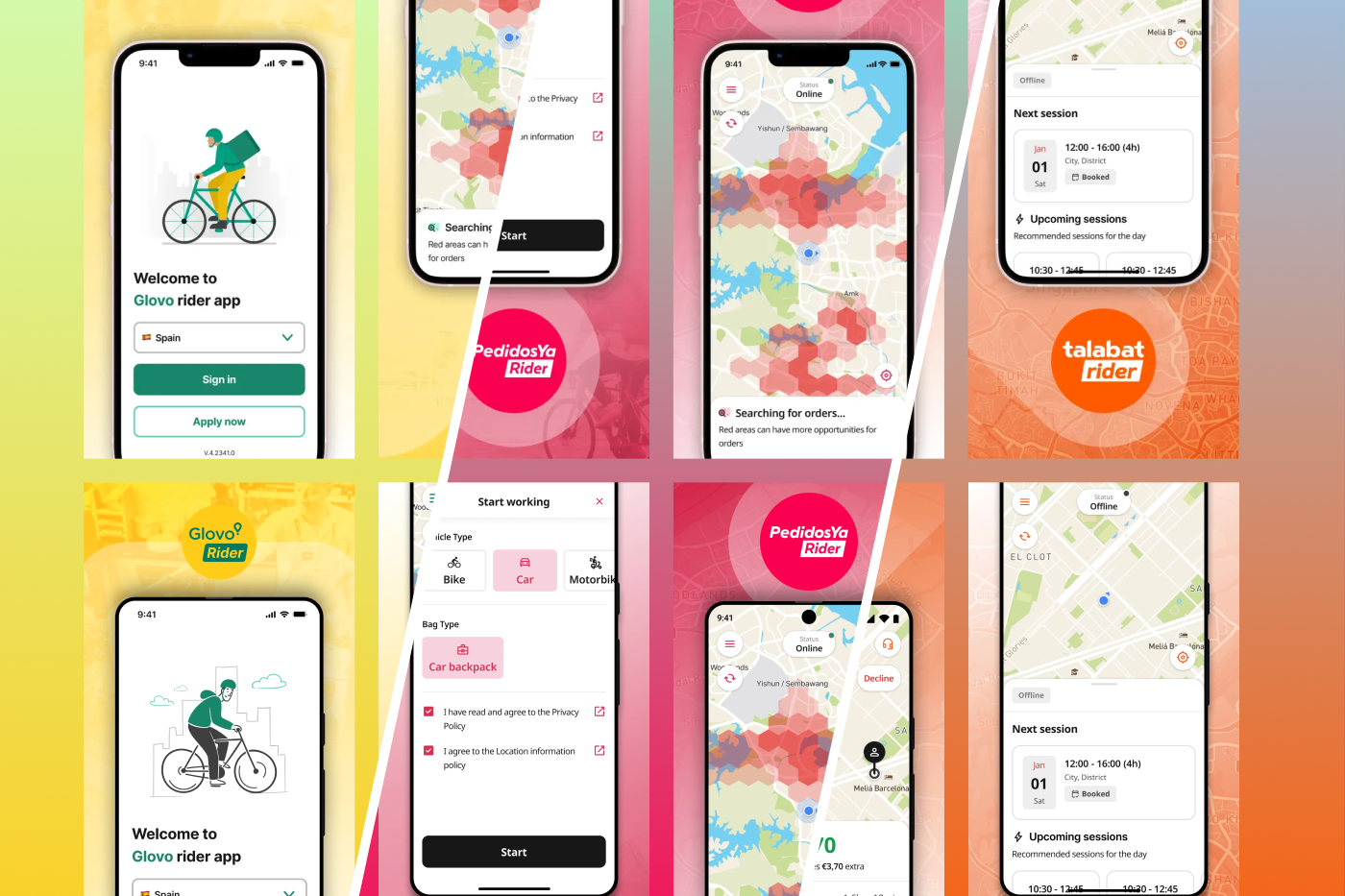
Design scale at Delivery Hero meant serving multiple global partners (including Glovo, PedidosYa, and Hungerstation) under distinct brand identities.
streamlining design system workflows
The domain design system was maintained by an IC4 Staff Designer. I worked directly with the design system owner to overhaul team communication and governance
- Created clearer contribution frameworks and intake channels between feature designers and the design system lead.
- Streamlined documentation and handoff guidelines, reducing implementation friction for engineers and accelerating component adoption.
lottie animation & white-label workflow
To bring delight and clear visual feedback to the rider app, our team integrated Lottie micro-animations across critical rider flows.
- Co-architected an updated handoff pipeline to ensure seamless asset optimization and technical integration.
- Built a flexible white-labeling system enabling dynamic asset and color replacement across all international partner apps from a single source file, drastically reducing design maintenance overhead.
strategic alignment & organizational visibility
Ensuring design operated as a peer to Product and Engineering required proactive cross-functional integration.
- Partnered closely with Product Managers and Engineering Leads to establish design representation early in discovery phases, ensuring UX strategy actively shaped feature roadmaps rather than reacting to specs.
- Co-led presentation strategy and interactive prototyping showcases for the domain Bazaar—an internal expo demonstrating design vision, research findings, and technical initiatives to company executives and cross-functional stakeholders.
field research & rider shifts
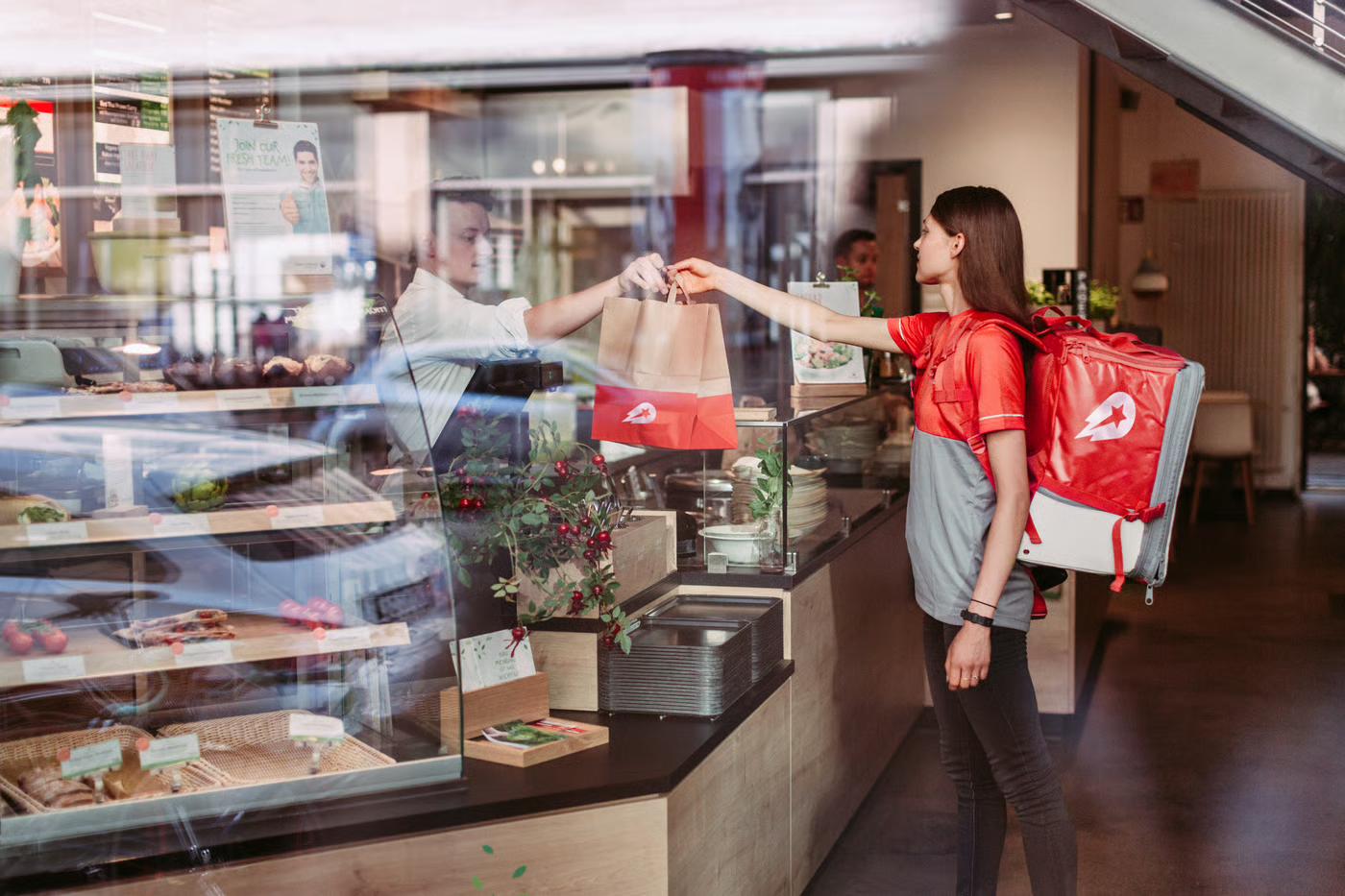
To build true empathy for our primary user base and identify real-world pain points, I took part in active field research along with design team members.
- Joined engineering and product peers in completing live delivery shifts in real urban environments.
- Experienced real-world edge cases firsthand—such as handling device connectivity drops, navigating dark stairwells, managing balance while biking with thermal bags, and executing rapid drop-offs.
- Direct field observations translated into actionable design refinements for high-stress rider flows, including higher contrast touch targets, improved offline state indicators, and streamlined navigation steps.
impact
development
Mentored and promoted 4 designers (~66% of IC team members) within an 18-month timeframe.
efficiency
Re-architected design system governance, unblocking cross-pod feature delivery and reducing design-to-engineering handoff cycles by ~25%.
scalability
Delivered a unified, multi-brand Lottie animation system deployed across all regional partner apps.
presence
Elevated design representation within product roadmapping and company-wide strategic showcases.